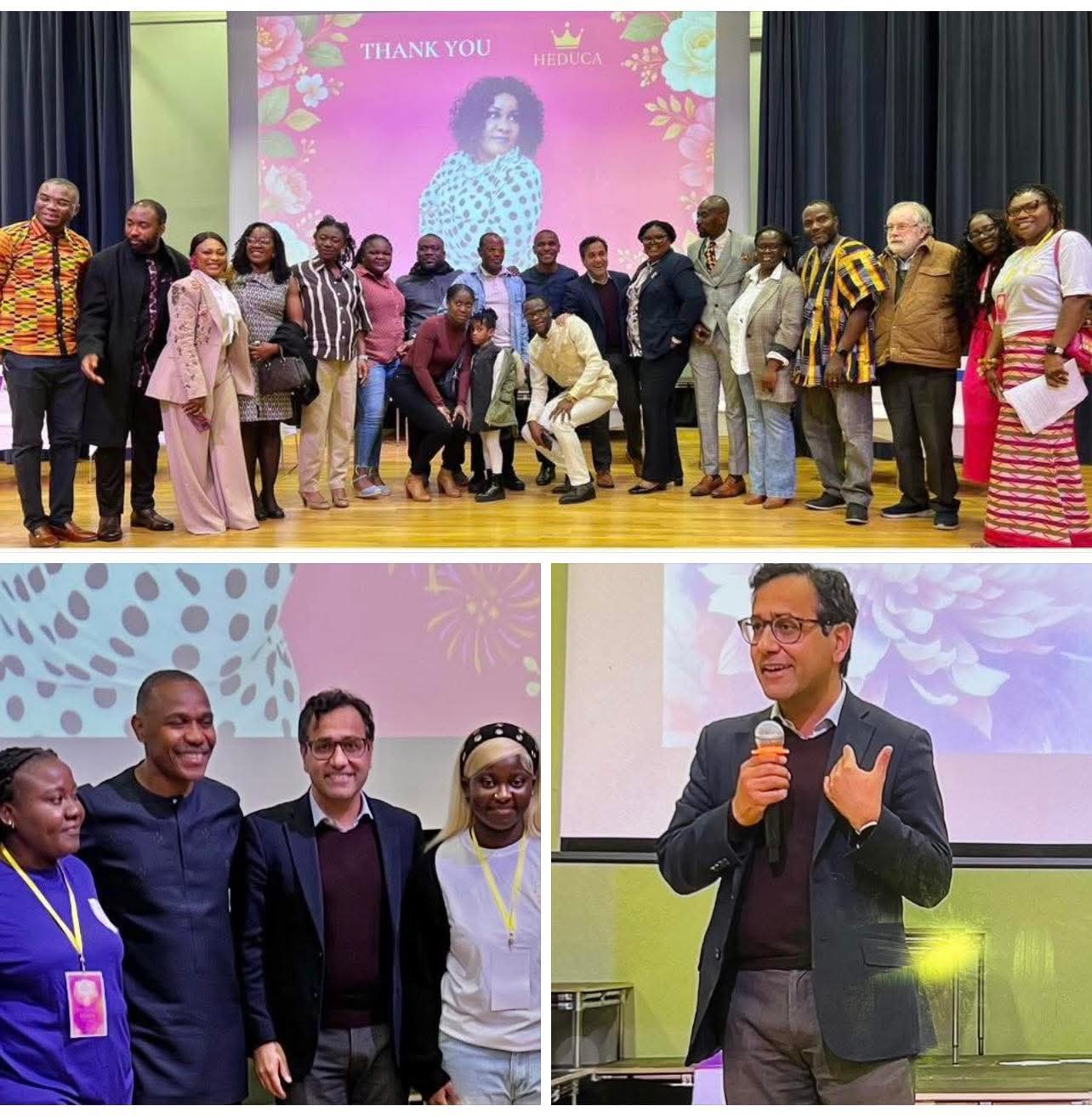
HEDUCA Awareness C.I.C has successfully organized its Women & Girls Reproductive Health & Empowerment Project, bringing together a diverse cross-section of the community to address critical health and wellbeing issues.
The hybrid event, held on March 28, 2026, at The Victory Academy in Chatham, attracted strong participation both in-person and online, reflecting growing interest in open and informed conversations around reproductive health.
The programme convened women, girls, men, healthcare professionals, and community leaders to help break stigma, promote awareness, and empower individuals with knowledge about their bodies and wellbeing.
Hundreds of participants attended in person, supported by additional virtual attendees, alongside professional speakers and community leaders.
The event featured expert-led health talks, panel discussions, lived experience sharing, and interactive engagement sessions. Key topics included menstrual health, endometriosis, fibroids, mental health, and access to healthcare services.
Sessions were delivered in a culturally sensitive and relatable manner, creating a safe and inclusive space for open dialogue, many participants engaging in such conversations for the first time.
Feedback highlighted the strong emotional and educational impact of the programme.
“This event helped me understand my body better,” one participant said.
Another noted, “I no longer feel alone,” reflecting the sense of community fostered by the initiative.
Participants described the event as informative, relatable, and empowering, with many calling for more programmes of this nature.
Beyond attendance, the project contributed to improving health literacy, reducing stigma around women’s health issues, and encouraging early help-seeking behaviours. It also promoted male involvement in reproductive health discussions, an often overlooked but critical component of community change.
Speaking to the media, Founder and Director of HEDUCA Awareness C.I.C, Ms Christiana Naa Kwarley Hansen, said the hybrid format enhanced accessibility and broadened participation.
She noted that the initiative was self-funded, demonstrating a strong personal commitment to addressing reproductive health challenges.
“Despite limited resources, the programme achieved significant impact, highlighting both the urgency of the issue and HEDUCA’s capacity to deliver meaningful interventions,” she said.
Following the success of the event, HEDUCA has announced plans to roll out additional initiatives, including a Youth Conference, a Youth Podcast and Safe Space Initiative, and a Skills Development and Empowerment Programme.
Ms Hansen said demand for the event exceeded expectations, underscoring the need for larger venues and more structured follow-up programmes.
HEDUCA reaffirmed its commitment to expanding its work and strengthening collaboration with Medway Council to improve outcomes for women and girls.
She added that the project demonstrates how community-led efforts, driven by education, dialogue, and collaboration, can deliver lasting social impact.
- Phone
- (+233) 24 262 8844 | (+44) 7399 000424
- info@heducaawareness.org | heducafd@gmail.com
News
31Mar
HEDUCA Delivers Reproductive Health and Empowerment Project in Chatham
31 March 2026